
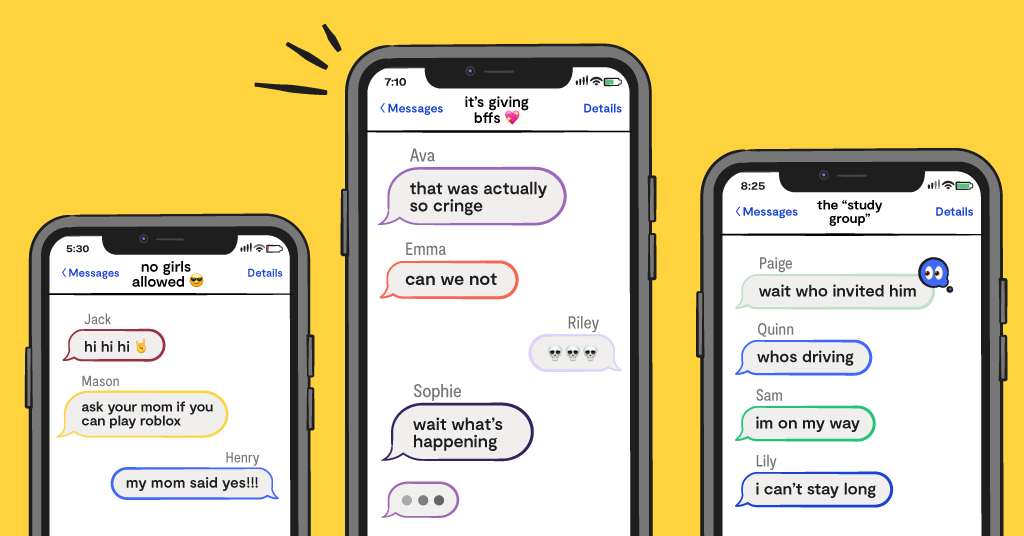
However, group chats can also create challenges. Fast-moving conversations, disagreements, exclusion and pressure to respond can sometimes leave children feeling overwhelmed.
We're exploring how parents and carers can support children to navigate group chats safely and confidently.
Why can group chats be challenging?
Unlike face-to-face conversations, group chats can continue throughout the day and night, often involving several people communicating at once.
For some children, this can create pressure to stay connected, respond immediately or participate in conversations they would rather avoid.
Common challenges include:
-
Fear of missing out: Worrying about being excluded from conversations or friendship groups.
-
Peer pressure: Feeling expected to join in with jokes, challenges or behaviour that makes them uncomfortable.
-
Misunderstandings: Messages can be interpreted differently without facial expressions or tone of voice.
-
Sharing private content: Screenshots, photographs or messages may be forwarded without permission.
-
Exclusion: Being deliberately removed from groups or left out of conversations.
-
Constant notifications: Feeling overwhelmed by messages or unable to switch off.
Not every disagreement is bullying. However, repeated targeting, humiliation, threats or deliberate exclusion can become a safeguarding or wellbeing concern.
Recognising when a group chat is affecting your child
Children may not always explain when something is troubling them online.
You might notice:
-
Anxiety or distress when notifications arrive.
-
Repeatedly checking their phone or feeling unable to put it down.
-
Changes in mood after messaging friends.
-
Becoming withdrawn or reluctant to attend school.
-
Worrying about being removed from a group or missing conversations.
-
Feeling pressured to respond, share information or participate in activities.
These behaviours do not necessarily mean something harmful is happening, but they may indicate that your child would benefit from support.
Every child responds differently. Some children, including those with additional needs, may find fast-moving conversations, social expectations or misunderstandings particularly difficult to manage.
How can parents and carers help?
1. Take an interest without judging
Ask your child which group chats they enjoy and what they like about them.
Showing curiosity can help children feel more comfortable discussing difficulties when they arise.
2. Encourage healthy boundaries
Remind your child that they do not need to respond immediately or remain available throughout the day.
Muting notifications, taking breaks and setting device-free times can help reduce pressure.
3. Talk about respectful communication
Discuss how messages can be misunderstood and why it is important to think before sending or forwarding content.
Encourage children to consider whether they would feel comfortable saying the same thing to someone face-to-face.
4. Help them manage disagreements
If an argument develops, encourage your child to pause before responding.
Sometimes stepping away from a conversation or discussing a disagreement privately can prevent it from escalating.
5. Make it safe to ask for help
Reassure your child that they can speak to a trusted adult if they feel threatened, excluded or pressured.
Avoid immediately removing access to devices when a child shares a concern. They need to know that asking for help will lead to understanding and support.
When should parents be concerned?
Most group chat disagreements can be resolved with guidance and support. However, some situations require further action.
Seek advice if your child experiences:
-
Repeated bullying, harassment or threats.
-
Pressure to share intimate images or personal information.
-
Blackmail, coercion or unwanted sexual messages.
-
Persistent exclusion or humiliation affecting their wellbeing.
-
Contact from unknown individuals who make them feel unsafe.
Where appropriate, keep relevant evidence, use the platform's reporting tools and contact your child's school or provision safeguarding team.
Do not copy or forward sexual images involving children. Seek safeguarding or police advice instead.
If there is an immediate risk of harm, call 999.
Start a Conversation
Try asking your child:
"If a group chat started making you feel uncomfortable, what do you think you could do?"
You might explore whether they would feel confident muting notifications, leaving a conversation, blocking someone or asking a trusted adult for help.
For some children, leaving a group may feel socially difficult. Rather than insisting on one solution, work together to identify an approach that helps them feel safe and supported.
Building Healthier Online Relationships
Group chats can be positive spaces where children develop friendships, share interests and feel connected.
The goal isn't to prevent children from participating, but to help them recognise healthy boundaries, communicate respectfully and know when to seek support.
Children should feel able to enjoy their online friendships without pressure to be constantly available or participate in behaviour that makes them uncomfortable.
At Fern Hill Education Group, we encourage families to maintain open conversations about online experiences and contact their provision's safeguarding team whenever they have concerns.
Further Information
-
Childline – Confidential support for children and young people on 0800 1111.